I always knew I’ve been at ease in the ever-changing role of the stranger: he who’s always coming from a mystic and distant place called elsewhere; he who’s always passing by, running away, out of place and out-rooted. The stranger is like a flower in a vase, you can carry it around, keep it in the sun or hide it in the shade.
If being a stranger were a job it would be filled with alibi. As a stranger it’s easier to live with the fact no one understands you, of being the other one, identified with a luggage, with the fact you should go home at some point, of being always at a certain distance from something or not being able to speak the language, of not having friends, of being the one missing, of walking alone with the wind.
When you live in your own context/place I think it is a bit more difficult to truly recognize yourself in a role. As a stranger instead you are guaranteed at least of one exclusive point of view. You will have a small part in the scene, you wont be left out, lost in the outskirts with dirty shoes because at any given moment you are entitled to raise and declare: "Wait a minute! I am the stranger!".
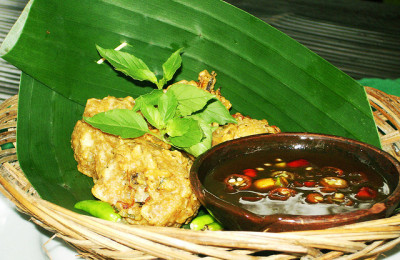
On the western edge of Jakarta, in Kampung Joglo, there is a warung famous for its salt fish. The warung is always full, and its customers come from every segment of Indonesian society, from motorcycle-taxi drivers to government officials and film stars. They all come for the ikan asin sayur asem-salt fish with vegetables in tamarind soup-the house specialty of the warung's owner, Nek Gabug. No one pays much attention to the fact that the dish is high in protein, with plenty of vitamins A and D and almost no cholesterol. They love it because its goodness is immediately evident-it tastes wonderful, with its complex sensations of pungent, sour, spicy, and salty-and because it is deeply familiar.
Several thousand years ago, waves of migrations from southern China began to populate the Indonesian archipelago. They came, of course, by sea, and they settled along the coasts, bringing culinary traditions that were rich in maritime survival techniques: they knew how to catch fish, how to cook fish, and how to preserve fish. In the same way that forest-dwellers depended on game, coastal people depended on fish, and in Indonesia still, the word for "side dishes" is the same as that for "fish".
By: Diana van Oort
Our family of mixed couples is growing bigger and bigger. The Latitudes Cross-Cultural Couples series is a testament to the intermingling of cultures that makes this world a more interesting and colorful place. Are you a mixed couple and would you like to be featured on Latitudes? Do you have an extraordinary tale of love that surpasses cultural boundaries and geographical borders? Then e-mail us at info@latitudes.nu!
This time we meet El Salvadorian Edward and Vietnamese who live in Saigon, Vietnam. During the interview the couple constantly comment on and complete each other’s sentences. They seem very much in tune with one another, like they have known each other for decades, but still maintain their own characters and quirks. After studying together in Switzerland, they now run a restaurant. It’s a nice place with good food. This is their story.
By: Riksa Afiaty
On April 30 this year -- one day before Indonesian National Movie day – there was a screening of Anak Sabiran di Balik Cahaya Gemerlapan (Sang Arsip) directed by Hafiz Ranjale, a well-known documentary director and video curator in Graha Bhakti Budaya, TIM, Jakarta. The movie is a collaboration between Misbach Yusa Biran and movie makers in Forum Lenteng, FuadFauji, Hafiz Rancajale, Mahardika Yudha, and Syaiful Anwar “Paul” and reflects upon movie archival strategies for almost 30 years in Sinematek.
Sinematek is located in Jakarta and is the first film archive in Southeast Asia, invented by Asrul Sani and the late Misbach Yusa Biran in 1975 and the movie was screened to tell the story of Sinematek and the importance of its preservation.
By: Emma Kwee
Time for another instalment of In the Mix! In this series we talk to people with a mixed background. Have these colorful roots entangled them? Confused them? In what way has their heritage formed their identity, how they look at the world and the world looks at them? Feel free to join in and tell us about your mixed roots. Just e-mail info@latitudes.nu and we'll send you some questions!
Today we meet Danny Smith, a guy with common last name, but less common roots. A wonderful mix of Vietnamese, Japanese and American genes add spice to his life, as well as his palate.
I boarded a worn-out, noisy bus in Tawangmangu, hoping for a decent seat where I could relax and take a nap on my trip to Solo. But, within minutes, the woman next to me started chattering in my ear and my idea of getting some rest rapidly vanished.
“My son is dating a girl from Brunei Darussalam”, she said proudly and proceeded to tell me all about him – how he works in a motorcycle shop in a tiny, wealthy state in north Borneo, makes good money in his after-hours job and is now about to take part in an intercultural marriage (with prospects of a possible larger fortune).
“My neighbor married a Dutchman and they have been living next door for more than five years,” she continued. Her following comment irked me. “Before her marriage, she had nothing. Now she owns several houses and land, some of them in Tawangmangu”.
Fighting against the stabbing pain, the woman in the bed wrinkled the skin on her forehead. Her eyebrows were sparse, gnawed on by chemotherapy. Twisting her face into a grimace, withstanding the pain, her nose looked sharper. Then she closed her eyes behind drooping eyelids. No traces were left to show that once, curling eyelashes had grown there. These had been the subject of never-ending praise from her husband, Abdullah Peureulak, who now sat speechless at the side of the bed.
Wanting to share her pain, Abdullah gently placed his hand under his wife’s, taking up her fingers and threading them between his. In her husband’s grip, the woman’s fingers became warm. It was only the warmth brought by her husband’s blood that flowed through his fingers. Abdullah knew that his grip was nothing more than an expression of sympathy. How painful the disease was, only his wife knew. At the edge of the bed Abdullah was no more than a husband slowly losing his mind. He didn’t know how to share this pain with his wife.
The smell of chloroform and the glare of the sun caught in the opaque windowpane surrounded Abdullah, who leaned forward and kissed his wife’s cheeks and lips for the hundredth time.
Those eyes. His wife’s eyes . . . ah, he still remembered the first time he embraced his wife and beheld her eyes, closed, hiding her bright round irises, thirty years ago. Those eyes had their own contribution to their life together. Those eyes had never ceased to be a source of amazement, to the point that Dewangga Suciati, the woman who became his wife, became awkward before her husband, not knowing how to respond to the shackles of praise and flattery that, whispered, fell in a torrent from her husband’s lips, even later, when both their children had grown to adulthood. But, now those eyelids, those eyebrows, those round irises that stirred his soul were the only remainder of her struggle against the disease that had tortured her for the past two years.
[caption id="attachment_30836" align="alignleft" width="300" caption="Dutch Indo Writer Marion Bloem, By Ivan Wolffers"]
[/caption]
(Introduction) The loss of their soil of birth and enforced emigration meant the beginning of a diaspora of Indonesian Eurasians, in the former Netherlands Indies better known as Indos (from Indo-Europeans).
Dutch attempts to restore colonial rule between 1945 and 1950 had proven the rearguard of a declining colonial power. The defeat of the dictatorial and aggressive regimes Nazi-Germany, fascist Italy and imperialistic Japan left behind a new world order in which there was no room anymore for colonialism. Instead, the self-determination of nations would be the new mantra. In part 2 the author covers the next generation of the Indos.
Indo diaspora is the result of a decolonization process. The colonial background still influences today Indos in diaspora. The dramatic and traumatic experiences of the Japanese occupation, Bersiap period and the involuntary migration abroad are collective issues of nowadays Indos. The never paid salaries of civil servants during wartime and the remembrance of a Dutch government long time trying to prevent Indos coming to the Netherlands are sculptured in Indos' memory. The need to share feelings, experiences and personal stories is a never ending need. Maybe more than ever Indos start weblogs, websites, organize historical theme sessions, workshops and come together in peer groups. The first generation immigrants had physically experienced the dramatic war an decolonization period. Anxious of an Indo past and ethno-cultural heritage in oblivion, passing on information to next generation created a sense of urgency. The second generation was the first one focused on fully integration in the recipient societies with leaving behind essential Indo cultural elements as the Malayan language, the knowledge of the genuine Indo cuisine, skills like massaging and typical Indo features as belief in supernatural phenomena. In the Netherlands around the mid-eighties of last century this generation began to wonder why their parents kept silent about their life in former Netherlands Indies. A first Indo "revival" started and young writers like Marion Bloem or artists as Ernst Jansz used Indo elements in their works. When a third generation Indos had become adolescents or adults they found themselves amidst a lot of other ethnic groups with distinctive own (sub)cultures and often the same common feature of a darker skin. Searching the social, cultural and ethnic roots, is a way of understand your personality and social position.
The loss of their soil of birth and enforced emigration meant the beginning of a diaspora of Indonesian Eurasians, in the former Netherlands Indies better known as Indos (from Indo-Europeans).
Dutch attempts to restore colonial rule between 1945 and 1950 had proven the rearguard of a declining colonial power. The defeat of the dictatorial and aggressive regimes Nazi-Germany, fascist Italy and imperialistic Japan left behind a new world order in which there was no room anymore for colonialism. Instead, the self-determination of nations would be the new mantra.
Although the Netherlands and Indonesia agreed to constitute a commonwealth of two independent states, president Soekarno in 1950 started a policy of confrontation. The former coloniser was declared an enemy and the relations between the two states deteriorated fast. This development precluded the massive leave of Europeans in Indonesia. Especially the Indos was made clear their place would not be anymore in Indonesia. Soekarno realized very well the (Indo-) Europeans were indispensable for good governance and business, but he needed the classical instrument of pointing an external enemy in order to hold his multi-ethnic and vast country together. Beside a profound economic crisis as a result of ten years of war had left behind a devastated country and an increasingly dissatisfied population. A disintegration of the young state was really at stake.
By: Peter van Riel
Dutchman Emile Leushuis' recent book 'Guide Historic City Tours in Indonesia 'isa must have for wanderers. Through practical composition and design, the book is an ideal tool to search for physical traces of the colonial era. The book presents walking trails in several Indonesian cities. We chose Jakarta and Bandung, the two largest cities with colonial buildings.
An almost sad feeling comes over you at a first sight at the ruins along the Kali Besar in Jakarta, the former Molenvliet. Bats, mold, vermin and vagrants have taken possession of the premises, often 19th century buildings with details that suggest long gone beauty.
Ornaments and inscriptions leave little to guess about how the former Handels Maintz & Co looked in full glory, when the canals were still clean and tidy. Not far away are the remains of the Dutch-Indies Handelsch Bank. Again in a deplorable state of preservation. The properties of Ghijsels virtually collapsed in 2008 during, sometimes caused by construction works of a large nearby hotel.
With 17,508 islands Indonesia has it all: bustling cities, green rice paddies & glorious beaches. Read all about it in our Indonesia travel guide.
Malaysia, truly Asia! Read about multicultural Malaysia, the people, the culture & the food in our Malaysia travel guide.
The city state of Singapore is an eclectic metropolis. Get to know the hot spots & explore the urban jungle with our Singapore travel guide.