
By: Emma Kwee
Ramadan has been underway since July the 20th and will end on August 18 2012. Idul Fitri will take place on August 19. Ramadan is the ninth month of Islamic calendar. It is a belief that in the month of Ramadan the Holy book of Muslims, Quran was sent down from heaven as guidance for men and also as a direction and a means to Salvation.
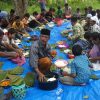
Ramadan is the month of fasting. The entire month Muslims fast and have no water and food during the daytime. They only eat and drink before sunrise and after sunset. The day starts with eating the suhoor. Once suhoor is done Muslims the fasting period, that lasts the whole day starts. In the evening when the sun sets another meal called If tar is eaten. To open the fasting they pray and eat. After Iftar people visit their relatives and neighbours and early in the morning they continue fasting.
Hari Raya Puasa is a joyous occasion that follows this month of fasting known as Bulan Puasa (Fasting Month) or Ramadhan. It falls on the 1 Syawal (10th month) of the Hijrah (Islamic) calendar; however the exact date is determined based on moon-sighting. This year Idul Fitri or lebaran is expected to fall on Saturday, 19 August. Idul Fitri is the biggest holiday in Indonesia. Shops that sell clothes and festive necessities are having their best month during the Ramadan with shopping malls and bazaars filled with people days ahead of Idul Fiti, causing a distinctive festive atmosphere throughout the country and traffic mayhem.
In contrast, the first few weeks after the celebration is the quietest weeks for business and road traffic. During and at the end of the ramadan, food is very important. Widely, markets, or ‘Ramadan bazaars’ are held in many areas around the country, where all sorts of food and kue/kuih — traditional delicacies and cakes — are sold for breaking fast or buka puasa. Special Ramadan recipes such as Dry Beef Rendang and Kuih Lapis Surabaya keep spirits high.
Typically, Muslims get up early on the day and have a small breakfast, usually consisting of dates. This is followed by congregational prayers at mosques or other open areas. After prayers and a short sermon, it is customary to embrace the people sitting on either side and greeting them. They also have a supplication, after prayers and the sermon, seeking forgiveness, help and mercy for all living things across the world. In Singapore, Hari Raya Puasa is the most prominent of all Muslim and Malays festivals as it is a time for new clothes, decorated houses and exchange of invitations between friends and relatives. Hence, it is fitting that Hari Raya is Malay for the “grand day” or “celebration day”.
Strengtening ties
It is not all celebrations though, as it is also a time of forgiveness within the Muslim community and to strengthen ties between family and friends. House visits usually begin at the parents’ home before moving on to relatives and subsequently, friends. Younger generations will ask their elders for forgiveness for the wrongs committed in the past year. It is an especially enjoyable time for children as adults give them token sums of money in green packets.
Read more about the rekindling of sharing and community spirit in Jack Lato’s reflection on Ramadan in his neighborhood (in which he also wonders if Ramadan is a blessing or a curse for the less fortunate in society).
The main greeting used by Muslims in Singapore and Malaysia is “Selamat Hari Raya” which means “Happy Eid” or “Happy Celebration” in Malay. Another greeting is “Maaf Zahir dan Batin” which translates loosely to “I seek forgiveness (from you) physically and spiritually”, for Hari Raya is a time to reconcile and renew relationships with others.
As a visitor to Muslim countries in Southeast Asia you don’t have to be afraid that you will have to go without food. Non-muslims are free to eat in restaurants and cafes. In Indonesia, many of the warungs (eateries) will be shielded from sight with cloth as not to tempt people. It is appreciated if you are respectful to those who fast, so no munching and drinking in front of people or on the street.
The Ramadan is actually a very joyeus period, where people come closer together, families sit together and community ties are strenthened. It is also a personal journey, tied in with people’s fondest childhood memories. Read Syazana Nur’s story Ramadhan: a personal journey to see how. As people are very conscious of what they are doing and why, they are generally also on their best behavior. The atmosphere is great, people are very considerate and courteous to one another. Ramadan seems to bring out the best in people.
4 Responses to Ramadan
Related articles
By: Emma Kwee
Time for another instalment of In the Mix! In this series we talk to people with a mixed background. Have these colorful roots entangled them? Confused them? In what way has their heritage formed their identity, how they look at the world and the world looks at them? Feel free to join in and tell us about your mixed roots. Just e-mail info@latitudes.nu and we'll send you some questions!
Today we meet Danny Smith, a guy with common last name, but less common roots. A wonder...
With 17,508 islands Indonesia has it all: bustling cities, green rice paddies & glorious beaches. Read all about it in our Indonesia travel guide.
Malaysia, truly Asia! Read about multicultural Malaysia, the people, the culture & the food in our Malaysia travel guide.
The city state of Singapore is an eclectic metropolis. Get to know the hot spots & explore the urban jungle with our Singapore travel guide.