Tags: Labodalih Sembiring
May 28, 2012
by Labodalih Sembiring

How to Party Like Pirates in Tobelo

By: Labodalih Sembiring


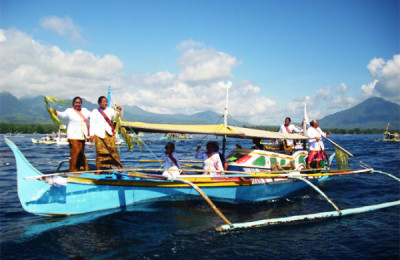
A group of women stand in a moving boat, dancing to traditional beats from a distant loudspeaker. They are all over 40 years old — one is in her late 60s. Every once in a while, they cry the distinct changa shriek: “Aheeheeheeheey!”


I met them many times in Tobelo, the capital of North Halmahera District in North Maluku Province. Every time I saw them, they were dancing and shouting energetically, only to stop when the music died. The ladies are part of a traditional art performance group named Gumi Guraci, whose headquarters are called Dabiloha and located near Tanjung Pilawang Beach. During my stay in town, nights of partying took place at this beachside venue.

April 23, 2012
by Labodalih Sembiring

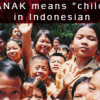
Toward Indonesian Children’s Awareness for Diversity

By: Labodalih Sembiring


Indonesian children today face a greater challenge than ever. We do still have street children, children who cannot continue their education, and child labor. Lately, however, children are faced with another serious problem at their schools, namely the narrowing of spaces where children can develop their awareness for the diversity that makes up this nation.


The above statement was made by Nia Sjarifudin, the Secretary-General of Aliansi Nasional Bhinneka Tunggal Ika (ANBTI), or the National Alliance of Unity in Diversity, at a capacity building training for caretakers of 60 children’s communities all around Yogyakarta and Central Java on February 18-19, 2012. The event was held by SOS Children’s Villages Yogyakarta in Kaliurang, Yogyakarta, and its theme was “Toward the Self-Sufficiency of [Children’s] Communities.”

February 16, 2012
by Labodalih Sembiring

The Indonesian Cinematheque

By: Labodalih Sembiring


Indonesians are more familiar with the term “Sinematek Indonesia” when referring to their cinematheque, not that it is that well-known outside certain circles such as film researchers and students, film festivals, and television stations. Despite its significance — it holds about 2,000 film titles and stores over 3,000 film reels and videos — one will soon feel its somber atmosphere upon visiting the facility.


In the words of its founder, while the Indonesian film industry was blossoming throughout the 1970s and 1980s, the cinematheque was dying because of its meager budget. It does not look so much different today.

December 5, 2011
by Labodalih Sembiring

Rembang’s Special Dishes, on the hunt for Central Javanese local delicacies

By: Labodali Sembiring


Rembang is the name of one of Central Java’s northern districts, as well as its capital. Getting here from Central Java’s capital of Semarang normally takes a 2.5 hours on a motored vehicle. Visiting Rembang for the first time, I let my local friend take me to some of the town’s simple eateries serving the district’s distinct delicacies.


Nasi Tahu and Srepeh Satay

Among the town’s must-try food is nasi tahu, which literally translates as rice and tofu, and is usually enjoyed with srepeh satay. There are two only two warung, or eateries, in Rembang Town where the two are served: Warung Pak No and Warung Bu Slamet.


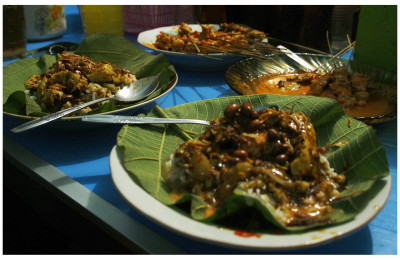
The first is tucked at a shaded corner next to a Chinese temple in front of an old swallow house in Rembang’s pecinan, or Chinatown. Open in the morning and at night, Pak No and his wife dish up a sweeter kind of nasi tahu than the one at Bu Slamet’s, which is situated on Jalan Wahidin. The tofu in nasi tahu is moderately ground in a mortal vessel together with cayenne pepper, tamarind, and salt. This mixture is then poured on top of warm rice served on a piece of teak leaf. The final touches to the dish are a sprinkle of beansprouts and a dash of lodeh dressing made from boiled vegetables.


November 21, 2011
by Labodalih Sembiring

Reintroducing Lasem’s Brilliant Batik

By: Labodalih Sembiring


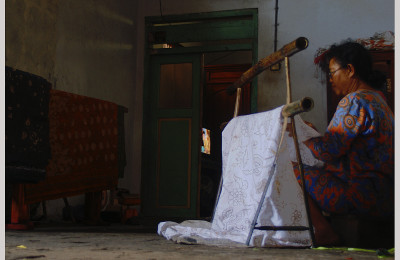
Batik is a cloth with distinct local and traditional patterns, created by a manual wax-resist dyeing technique. UNESCO designated Indonesian batik as a Masterpiece of Oral and Intangible Heritage of Humanity on October 2, 2009. As part of the acknowledgment, UNESCO insisted that Indonesia preserve their heritage. Then why would batik need reintroduction? This article talks about a kind of batik you don’t typically see: Lasem batik.


The Javanese batik can generally be divided into two kinds: kraton (court) batik and pesisir (coastal) batik. The kind of batik motifs you are probably familiar with are the ones from Yogyakarta and Solo—the kraton type. Out of all kinds of coastal batik, generally the batik from Pekalongan gets into the limelight most often, even though batik from Lasem is just as fascinating, if not more.


June 8, 2011
by Labodalih Sembiring

Introduction to Northern Sulawesi

By: Dalih Sembiring


The provinces of North Sulawesi and Gorontalo make up most of the Minahasa Peninsula, the northernmost arm of Sulawesi, also known as the island of besi or iron. The predominantly Muslim populated Gorontalo lies on the western side, bordering North Sulawesi, which is predominantly Christian, in the east. The two used to be one province until Gorontalo was split from North Sulawesi in December 2000. In this introduction we will look at the highlights of the land and culture of Minahasa.


North Sulawesi’s Underwater Beauty

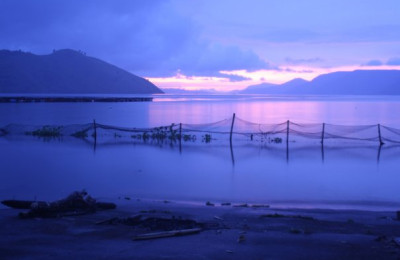
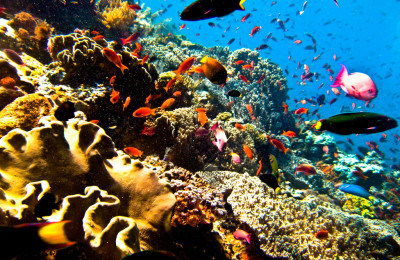
Part of The Coral Triangle, northern Sulawesi’s underwater beauty is unbelievably rich. The two provinces share Tomini Bay, a body of water just under the aforementioned arm, with Central Sulawesi. Almost touching the equatorial line, the calm, sundrenched beaches that hug Tomini make for a perfect tropical getaway. Olele Beach, about 20 kilometers south of the province’s capital of Gorontalo City, is Gorontalo’s most famous gate to the bay’s underwater splendor.

May 12, 2011
by Labodalih Sembiring

Sumatra, the Island of Gold, Orangutans & Spicy Food

By: Dalih Sembiring


Sumatra, also spelled Sumatera, is in its entirety Indonesia’s largest island. One may say that Kalimantan or Papua is larger, but those two islands are shared with other countries.


Sumatra: The Island of (Black) Gold

It has been suggested that the world’s sixth largest island got its name from “Samudera,” a 13th century Muslim harbor kingdom located in the northwestern part of modern day Nangroe Aceh Darussalam, Indonesia’s only province authorized by national law to implement sharia-inspired regulations. Around that time, the island was also referred to as Bhumi Malayu, the land of the Malay people and culture.

April 14, 2011
by Labodalih Sembiring

Food Heaven in a Medan Alley: Jalan Selat Panjang Medan

By: Labodalih Sembiring


Medan, 9:45 p.m. The city’s commonly unruly traffic has died down. But this is not the case in a narrow street tucked behind Jalan Semarang, about a kilometer south of Merdeka Square.


At a bend inside the alley, a street light illuminated the wooden windows of aged, two-storey houses. It was a romantic welcome for my friend and me, both first-timers to Jalan Selat Panjang. Under the orange gleam, hot steams billowed out from a food cart displaying pork buns.


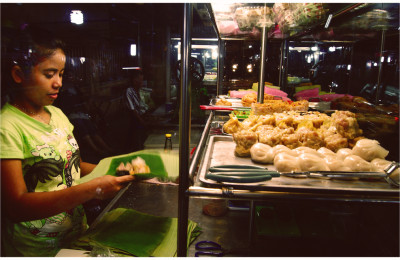
Jalan Selat Panjang is famous for its food, along this street you will find some of the oldest Chinese eateries in Medan. Feast on mie pangsit tiong-sim (noodles served with stuffed dumplings), kwetiau goreng (wok-fried Chinese rice-fetucinne), pokpiah (Singapore-style vegetable-stuffed dumpling).


February 12, 2011
by Labodalih Sembiring

Borobudur: the Largest Buddhist Temple in the World

By: Labodalih Sembiring


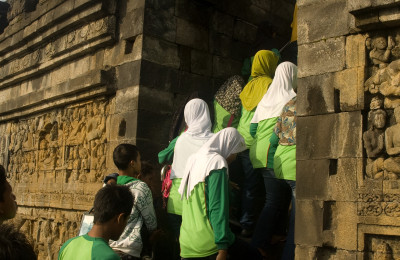
The Borobudur is the largest Buddhist temple in the world. It took approxiamtely 75 years to build and stems from the Syailendra dynasty in the 9th century. It consists of ten platforms — six of square shape, three round, and one main stupa at the center of top platform.


The beautiful vistas all around this temple are enhanced by the presence of Merapi and Merbabu volcanoes in the east and Sindoro and Sumbing volcanoes in the north. Rivers, big and small, crisscross the fertile area; two of them, Elo and Progo, are famous among local rafters.


A bit of History

It is estimated that Borobudur took 75 years to build, at the peak of the Syailendra dynasty in the 9th century. It consists of ten platforms — six of square shape, three round, and one main stupa at the center of top platform. Indeed, the temple’s original name as proposed by Dutch philologist J.G. de Casparis, is Bhumi Sambhara Budhara, Sanskrit for “the mountain of combined virtues of the ten stages of Boddhisattvahood.”

January 8, 2011
by Labodalih Sembiring

Insider Tips Yogyakarta

By: Labodalih Sembiring


Want to make the best of your final days in Yogyakarta after having visited all of its major attractions? Check out these five favorite places:


1. Lik Man’s Angkringan

Unseen during the day, the popularity of Uncle Man’s Angkringan (food stall) among students, artists and activists as a gathering spot comes to light at night. The roadside tents selling Javanese snacks and drinks stand by Yogyakarta’s main train station. Sit around wooden tables near the traditional stoves or on matresses across from the tents, your choice, but be sure to try kopi jos, thick black coffee infused with burning charcoal that is sure to give it an extra kick.


2. Girijati Village

This small village lies on the southern part of Yogyakarta, on the border between Bantul and Gunung Kidul regencies. Lush and green and surrounded by streams of clear water, it is also home to Gembirowati Site, Beji Springs and natural caves. Often mistaken for a candi or temple because of its shape and coral rock reliefs, Gembirowati Site is the remaining platform of an early 19th century royal mansion. Beji Springs, on the other hand, boast a folktale: Locals believe it was the meeting place of Javanese hero Jaka Tarub and goddess Nawangwulan. Pilgrims perform rituals by the main pond or inside some of the caves on certain dates.

Indonesia

Indonesia Travel Guide

With 17,508 islands Indonesia has it all: bustling cities, green rice paddies & glorious beaches. Read all about it in our Indonesia travel guide. 

Malaysia

Malaysia Travel Guide

Malaysia, truly Asia! Read about multicultural Malaysia, the people, the culture & the food in our Malaysia travel guide. 

Singapore

Singapore Travel Guide

The city state of Singapore is an eclectic metropolis. Get to know the hot spots & explore the urban jungle with our Singapore travel guide. 

Transportation type:

PERAMA SHUTTLE BUS

Perama Shuttle bus and boat is the best way to explore Bali, Lombok and its surroundings in an easy, safe and affordable way. We offer a wide choice of daily shuttle bus routes to all main tourist attractions in Bali & Lombok.

Flight type:

(infants and children included)