By: Gabrielle Yetter
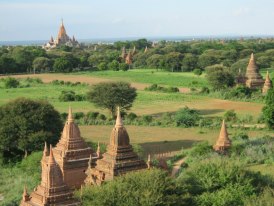
With one hand balanced on the steering wheel, our driver, Thura Thein, fumbled in his pocket as he drove along the busy Yangon road from the airport.
A moment later, he pulled out a photograph. Smiling broadly, he thrust it toward us. “This is me with Aung San Suu Kyi,” he proudly declared, and he pointed out the home where the revered Burmese opposition leader spent 15 years under house arrest.
“She saved our country,” said one of the Burmese tour guides we met at Shwedagon Temple. “Our country is changing and everyone is very hopeful.”
It was the same everywhere. People smiled when talking about Burma (or Myanmar, as the military regime named it). Street vendors sold t-shirts displaying Suu Kyi’s face. An office in Bagan hung signs proclaiming “National League for Democracy “.
Things are shifting – and the people we met were happy to share their joy.
It hasn’t been like this for long. The Lonely Planet guide of 2011 cautions travelers “Don’t raise political questions and issues in inappropriate situations” and “Show equal caution regarding what you ask or say on the phone or via email” as well as “Asking a taxi driver to take you past Aung San Suu Khyi’s house or to an NLD office could implicated them”.
By: Gabrielle Yetter
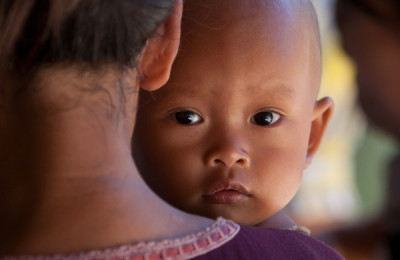
When Chan Moniroth delivered her first child this July, she wasn’t able to wash her hair for a month after the birth. She also had to inhale herbal vapors every day and was instructed by elderly female relatives to avoid the use of computers and televisions.
During her pregnancy, she was cautioned not to eat spicy foods, not to raise her hands above her head and not to take a bath in the evenings.
Such are traditional health practices in Cambodia among pregnant women where old wives tales are often more the norm than modern medical techniques and upward of 60% of the population practices traditional healing methods according to the National Centre of Traditional Medicine in Phnom Penh.
While younger women with university educations and modern urban lifestyles are slowly moving away from some of these traditions, they are finding it harder to break away from family pressures when it comes to starting a family of their own.
By: Gabrielle Yetter
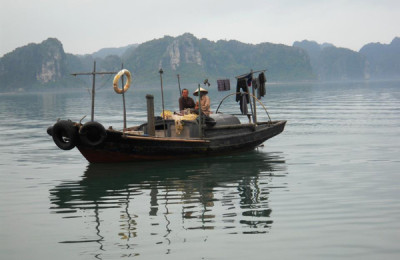
This breathtaking bay in the north of Vietnam provides a wonderful taste of nature. Complete with massive limestone islands, fishing villages, grottoes, island hikes and beach picnics, an excursion to this region offers various styles and experiences – from basic to luxury.
By: Gabrielle Yetter
It's not every day that begins with a princess telling a story which starts "Once upon a time there was a little girl".
And it's not every day you find yourself in the company of some of the brightest and most interesting minds from around the country sharing their thoughts, feelings and insights.
But every day isn’t June 9, 2012, the date of the second annual TEDx conference in Phnom Penh, Cambodia.
This princess was Soma Norodom, niece of King Norodom Sihamoni, who was host of the event. And her story was a true tale of hope and motivation. Having been forced out of Cambodia in 1975 with her family while she was a child during the Khmer Rouge regime, returning in 2010 to care for her ailing father and working as a journalist and radio host in Phnom Penh, she introduced this year’s theme of “Aspirations. Inspirations. Generations”, illustrating it with a host of speakers who shared their knowledge.
By: Gabrielle Yetter
Cross-cultural couples is back! After a hiatus we decided to pick it up again and continue this amazing series about the lives, love and tribulations of mixed Southeast Asian couples. Do you want to be featured and share your story with our readers? E-mail info@latitudes.nu for more info!
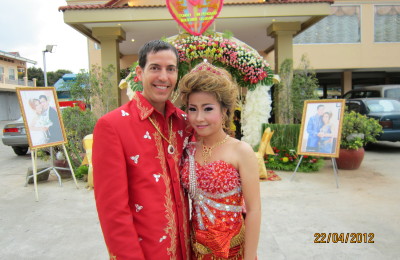
This story takes place in Cambodia where, On April 22, Tommy and Leaksmy tied the knot, Cambodian style, after a courtship which began two years ago during a chance meeting while Tommy was on holiday. Here is their story.
By: Gabrielle Yetter
There’s singing in the streets of Hanoi.
Around almost every corner in the city’s Old Quarter, you’ll find wooden birdcages hanging from telephone wires or dangling outside cafes and shops. Inside are tiny birds, chirping and twittering as motos zoom beneath them, street vendors carry poles across their shoulders bearing baskets of pineapples and bananas, and tourists browse countless boutiques and souvenir shops while dodging the constant surge of traffic.
Hanoi is a city of contrasts and turmoil. The capital of Vietnam, it’s a metropolitan center offering everything from history to culture to great cuisine to a thriving expat community.
It’s a place where beautiful French architecture mingles with skinny sliver buildings, chic fashion boutiques stand alongside street merchants selling slabs of raw meat or steamed corn and almost four million motorbikes dominate the roads.
By: Gabi Yetter
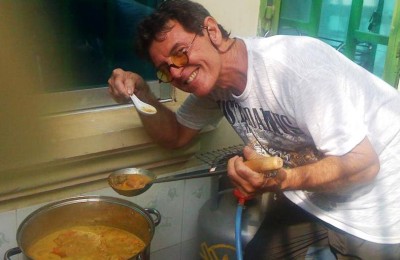
Not long ago, Johnny Phillips spent his days cooking lobster risotto and filet mignon for well-heeled patrons of his upscale restaurants.
Today, Johnny has a different kind of customer – tiny, barefoot children from the streets of Phnom Penh who come to his location for a plate of food to keep them from hunting in the garbage.
At 11am every day the gates to Buckhunger swing open and a steady stream of small patrons filter in, wash their hands and take a seat at a shiny metal table on a blue plastic chair. A group of Cambodian twenty-somethings serve their meals, sweep the floors and clear away their dishes – using the skills they learned from this former restaurateur.
“I train them so they can work in a restaurant after being here,” said Johnny. “The customers at Buckhunger may be little children, but they are waited upon as though they are regular patrons.”
By: Gabrielle Yetter
It was the first time I’d seen leeches.
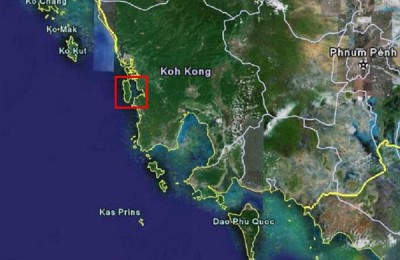
In the jungle terrain of Koh Kong, there were masses of them, many of which fastened themselves onto my legs and ankles as we tramped through the undergrowth on our trek through the Cardamom Mountains. Our guide, a gnarly-faced Cambodian man wielding a machete, cut a path through the dense brush and slashed branches hanging across the trail until we finally arrived, hot and dripping with sweat, at our destination.
First we heard the sound of rushing water. And soon, a pristine, crystal clear waterfall emerged in front of us, beckoning us to swim in its refreshing pools and slither across the moss-covered rocks into the cool water.
By: Gabi Yetter
When people come to Cambodia, they usually take a while to settle in.
Not Ramon Stoppelenburg.
Ramon arrived in Phnom Penh last September, found a place to live in three days and within six months was the new owner of the city’s only movie house.
This may not sound like a great feat but Ramon took a slightly different path to most. He did it with no money.
As the king of networking, he flung out the net, built it – and they came. That’s how he does things. His global escapades began in 2001 when he launched the website LetMeStayForADay.com asking people to invite him to their homes from his base in Amsterdam. The concept flickered and caught fire and Ramon received 3,577 invitations from 77 countries. So he hit the road for 26 months, staying with strangers who soon became friends.
By: Gabi Yetter
This week is not about the living. It’s about the dead. It’s a 15-day celebration (culminating in the big three days this week) where Cambodians pay respect to their ancestors, travel home to family provinces and make early morning or evening pilgrimages to the pagoda to deliver food and prayers.
It’s the time, according to Cambodian tradition, when the gates of hell are opened and the ghosts of the dead are particularly active. So people gather en masse at pagodas in their home towns to pray for their departed loved ones. The belief is that these ancestors are trapped in the spirit world and their descendants need to bring offerings of food and money to help them move on. Pagoda visits usually happen very early as Cambodians believe most souls are afraid of sunrise and more likely to wander around during dawn or early in the morning.
With 17,508 islands Indonesia has it all: bustling cities, green rice paddies & glorious beaches. Read all about it in our Indonesia travel guide.
Malaysia, truly Asia! Read about multicultural Malaysia, the people, the culture & the food in our Malaysia travel guide.
The city state of Singapore is an eclectic metropolis. Get to know the hot spots & explore the urban jungle with our Singapore travel guide.