By: Gabi Yetter
When people come to Cambodia, they usually take a while to settle in.
Not Ramon Stoppelenburg.
Ramon arrived in Phnom Penh last September, found a place to live in three days and within six months was the new owner of the city’s only movie house.
This may not sound like a great feat but Ramon took a slightly different path to most. He did it with no money.
As the king of networking, he flung out the net, built it – and they came. That’s how he does things. His global escapades began in 2001 when he launched the website LetMeStayForADay.com asking people to invite him to their homes from his base in Amsterdam. The concept flickered and caught fire and Ramon received 3,577 invitations from 77 countries. So he hit the road for 26 months, staying with strangers who soon became friends.
By: Reza Daffi
Indonesian cinema seems to mirror developments in Indonesian society. During colonial times most movies had Dutch involvement on one level or the other. Then, during the Sukarno years, the newly gained independence added a nationalistic and anti-Western tinge to most movie productions. Foreign films were even banned! During Suharto's reign, censorship gave filmmakers a tight rope to walk on, but also spurred a lot of creativity. After reaching its peak in the 80s with the likes of Catatan Si Boy (Boy’s Diary), Nagabonar, and Warkop Trio’s comedy, Indonesian film industry died down over the following decade. This was mainly due to the fact that foreign import of films resumed. Indonesian cinema had no answer to the sudden competition. As a consequence, flicks made in the 90s are mostly adult movies of poor quality. Filmmakers and fans often refer to this as the Krisis Film Nasional.
What happened afterwars and what is the status of Indonesian cinema now? Reza Daffi made a huge bowl of popcorn and explored...
By: Melissa Lin
Remembering our roots
Film making in Malaysia can be traced back to the 1930’s. The first production, Leila Majnun, is a well known Persian love story of two star crossed lovers. A few more films followed Leila and Majnun until production of film ceased during the Japanese invasion of 1941. Film making was picked up once again in the 1940’s and continues to present day.
The Iconic social activist P. Ramlee
One of the most iconic and influential persons in Malaysian film history is P Ramlee (1929 - 1973). Multi talented, he was a director, singer, songwriter, producer and composer. Directing and acting in 66 films and writing 360 songs during his career, he was perhaps the first social activist who used the medium of film to portray the realities of his own life, along with messages about class divisions and poverty in Malay society.
By: Yvette Benningshof
While outside the streets were buzzing with traffic and guarded transport because of the 19th ASEAN Summit in Nusa Dua, inside of Galeria 21 Cineplex in Kuta there was a comfortable coolness. The two day ASEAN Film Festival took place in this cinema, where at the same time BALINALE International Film Festival was held. Bali was the place to be for film lovers this month!
The ASEAN Film Festival (16-17 November) was initiated by the Minister of Tourism and Creative Economy Mari Elka Pangestu themed: ‘The Global Film Connection’. The minister recognizes the importance of film festivals as a means of promoting culture and to support the country’s potential as a film location. ‘Film affects many area’s: how people think, talk, act and it influences their ideals and dreams. On a larger scale it creates jobs and it has a mulitplier effect on other sectors such as music, design, fashion and technology.’
By: Yvette Benningshof
The directors of Balinale International Film Festival certainly have a nose for special international and Indonesian feature films, in depth documentaries and delightful short and family films. Last year the 5 day festival premiered Hollywood’s ‘Eat, Pray, Love’ (partially set on Bali). This 5th edition showed 26 films back to back on one screen in Bali’s only cinema: Galeria 21 Cineplex in Kuta (besides from the run down Wisata 21 on Jalan Thamrin, Denpasar).
Balinale is just like Bali island itself: small and unique. It might not be as big as other international film festivals around the world, but it has a great variety of excellent movies to offer. A lot have their Asian or International premieres here and this is definitely a chance to enjoy some ‘alternative’ movies that you don’t get to see in the rest of Indonesia.
By: Monica Dominguez
If you decide to romp the late night streets of Yogyakarta, you might encounter one of the area’s 350 waria performing in the streets, soliciting sex or just hanging out.
The term waria is an amalgamation of the Indonesian word for woman, wanita, and the word for man, pria, which has been coined to describe the transgendered population of Indonesia. These days in Yogyakarta society has buttonholed its warias into a specific category of entertainers (namely buskers and street artists), beauticians and sex workers, because they are deemed socially unacceptable in other professions.
Most of the warias in Jogja are male-born with male genitalia crossdressing as females, and many of them consider themselves to be Muslim. “You can’t say a waria is a man, and you can’t say a waria is a woman. A waria is a waria.” [- Vera , Wariazone.].
The Senin-Kamis (Monday through Thursday) School is a school located behind a beauty salon in Jogja specifically welcoming and teaching the queer and transgendered population about Islam, and providing a space for them to pray.
BALINALE International Film Festival was established in 2007 by Bali Taksu Indonesia Foundation, founded by Christine Hakim, Indonesia's internationally recognized film actress and producer, and Deborah Gabinetti, director of Bali Film Center, the non-profit, non-government Indonesian registered charity organization provides an opportunity to invite foreign filmmakers to screen their films while experiencing Indonesia's accommodating culture and diverse locations for possible film locations or story ideas.
The festival also gives Indonesian filmmakers an opportunity to present their work to a global audience while networking with international filmmakers. See the video below to get an idea of what the Balinale International Film Festival is all about:
Asian Hot Shots Berlin – the festival for young Asian cinema takes place from the 9th to 11th of September at cinema Moviemento in Berlin Kreuzberg. Whether it’s animation or videoart, fiction or documentary, Japan or Korea – the filmfestival Asian Hot Shots Berlin represents independent asian cinema beyond the mainstream: young, fresh, artistic and political films are presented to the audience.
By: Yvette Benningshof
First time visitors to Bali are often astonished by the amount of dogs on the island. With the slogan ‘Bali: Island of the Gods’ still freshly in their minds they are confronted by the other inhabitants of paradise: hoards of diseased and scavenging dogs.
But who would have thought that these dogs carry the richest pool of genetic diversity of all ‘dogdom’?’ Internationally acclaimed filmmaker and Bali resident Lawrence Blair and director Dean Allan Tolhurst reveal an unknown story in their latest documentary: ‘Bali, Island of the Dogs’.
By: Ari Purnama
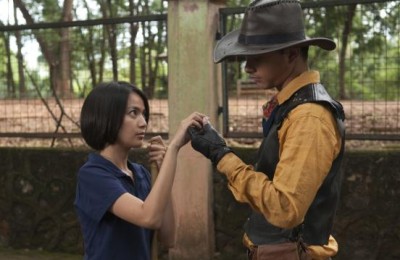
Belkibolang (short for ‘Belok kiri boleh langsung’ [Indonesian for “turn left directly”]) is an omnibus of nine short films put together by prolific Indonesian young filmmakers. Besides the spatial and temporal setting—Jakarta at night time and a slice of life of its inhabitants—perhaps there is no conspicuous thread that connects each film to the other, at least not in a straightforward manner. But this is not to say that they are not coherently woven. Despite the diversity of the subject matter, these films seem to facilitate a fresh conversation among the filmmakers themselves and between them and the global festival audience.
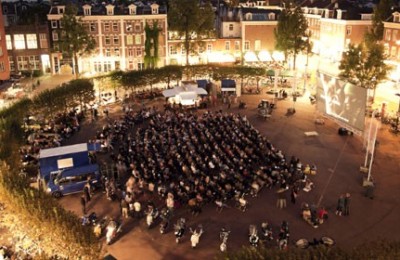
Premiered at the International Film Festival Rotterdam earlier this year, Belkibolang since then has received numerous critical praises and festival invitations ranging from Udine Far East Film Festival 2011 to Hong Kong International Film Festival 2011. If you happen to be in the Netherlands this month you are in luck. The World Cinema Amsterdam Festival shows Belkibolang on Sunday 14 August 15.00 and 16 August, 17.30 at the Rialto. Afterwards the festival will go on tour and Belkibolang will be screened in Den Haag (22 August), Maastricht (3 September) and Groningen (10 September).
With 17,508 islands Indonesia has it all: bustling cities, green rice paddies & glorious beaches. Read all about it in our Indonesia travel guide.
Malaysia, truly Asia! Read about multicultural Malaysia, the people, the culture & the food in our Malaysia travel guide.
The city state of Singapore is an eclectic metropolis. Get to know the hot spots & explore the urban jungle with our Singapore travel guide.